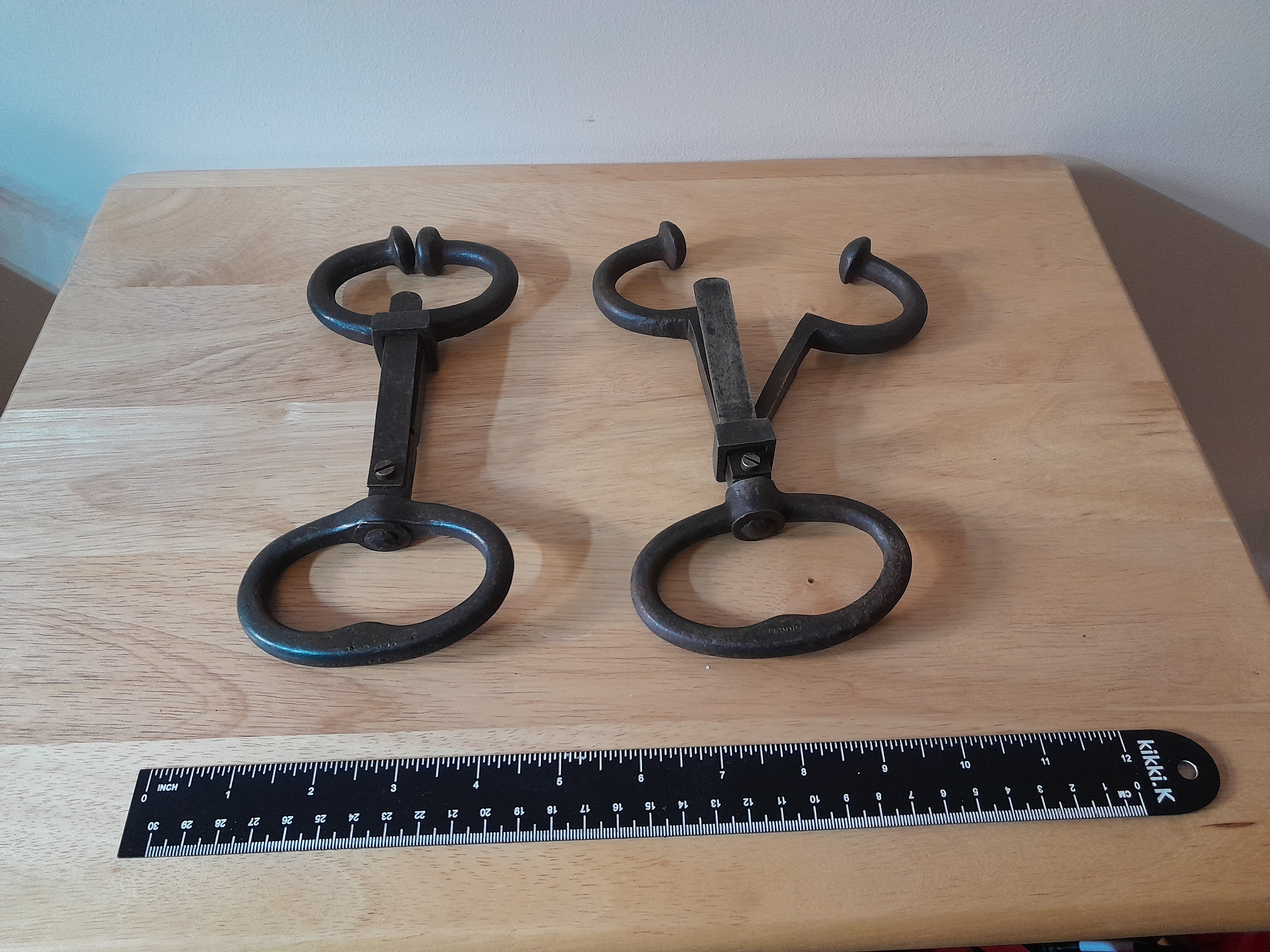
In 1819 J & S Arnold branched out from being a chemist to eventually become a well known company called Arnold & Sons ltd, manufacturers of surgical and veterinary instruments.
These pair of bull holders date from 1820. The one on the right is stamped 'Arnold' - that is how I know how old it is. They are very heavy and not politically correct today as they would be considered cruel. They were opened wide; placed in the bull's nostrils; and securely clamped closed.
The bull would be lead by a rope halter but a second rope would be attached to the bull holder, and combined, should ensure a well behave bull.
These pair of bull holders date from 1820. The one on the right is stamped 'Arnold' - that is how I know how old it is. They are very heavy and not politically correct today as they would be considered cruel. They were opened wide; placed in the bull's nostrils; and securely clamped closed.
The bull would be lead by a rope halter but a second rope would be attached to the bull holder, and combined, should ensure a well behave bull.
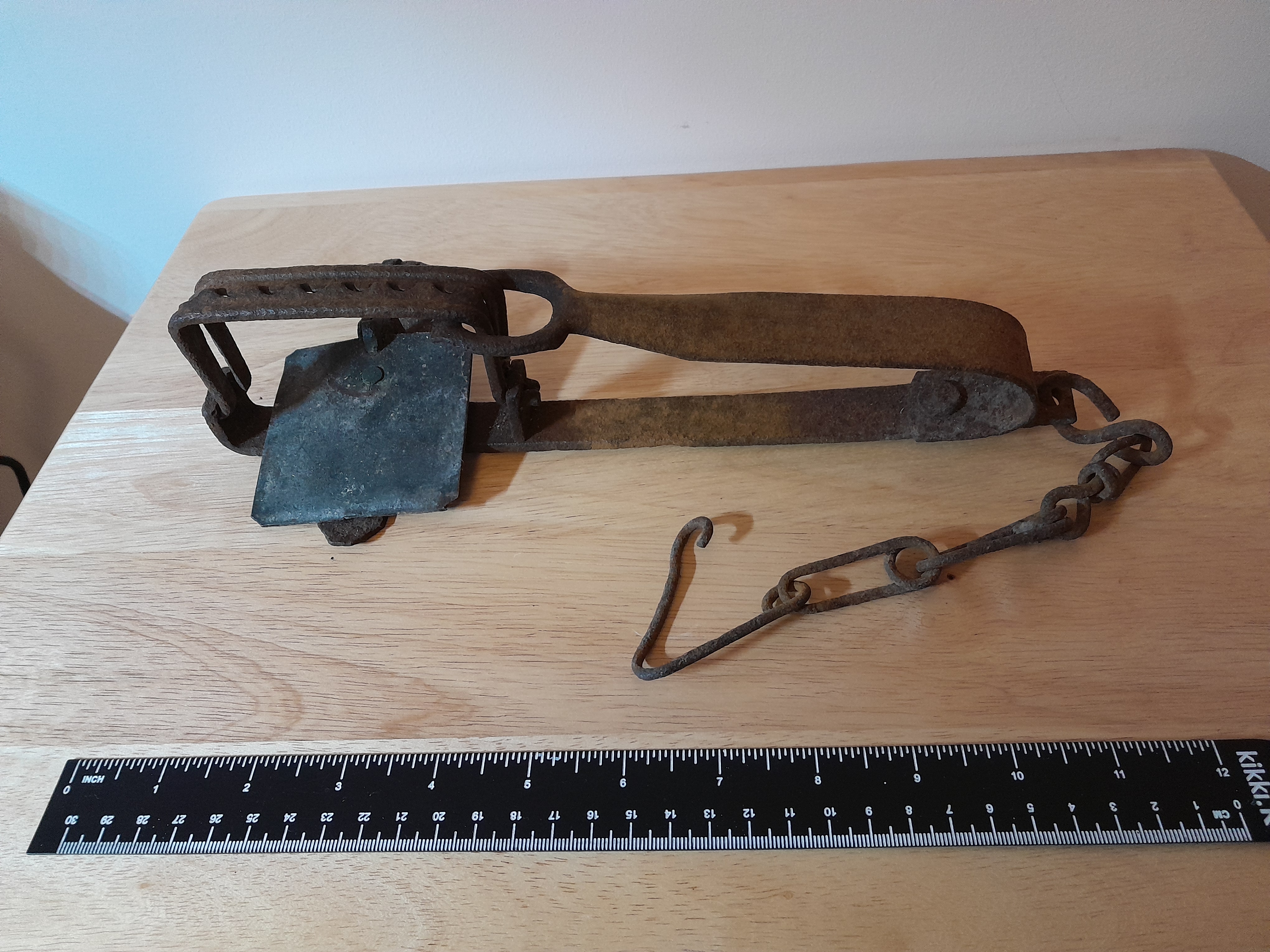
No longer considered a humane trap.
A gin trap is a mechanical device designed to catch an animal by the leg or head using spring operated steel jaws. It is now considered a barbaric means of entrapment but for centuries it was considered acceptable.
Gin traps have been illegal to use in England since 1958, but it is entirely legal to possess these antiques, and to buy and sell them. Certain types of spring trap are still legal to use in the UK as long as they are set according to strict guidelines. The Spring Traps Approval Order 2018 details the traps which are still legal to use in England, and under what conditions.
The word gin is believed to have come from the word engine which was used historically to describe a self-actuating mechanical device. Gin entered our language as a distortion of the word engine, and as is so often the case with the English language, became accepted as a noun in its own right.
The trap pictured above is a classic rabbit trap with 4 inch jaws and an overall length of about 11 inches. There are 2 1/4 inch and 2 1/2 inch and 3 inch and 6 inch traps to catch birds or mice in the smallest, stoats and weasels in the next, rabbits in the 4 inch and foxes in the 6 inch.
A gin trap is a mechanical device designed to catch an animal by the leg or head using spring operated steel jaws. It is now considered a barbaric means of entrapment but for centuries it was considered acceptable.
Gin traps have been illegal to use in England since 1958, but it is entirely legal to possess these antiques, and to buy and sell them. Certain types of spring trap are still legal to use in the UK as long as they are set according to strict guidelines. The Spring Traps Approval Order 2018 details the traps which are still legal to use in England, and under what conditions.
The word gin is believed to have come from the word engine which was used historically to describe a self-actuating mechanical device. Gin entered our language as a distortion of the word engine, and as is so often the case with the English language, became accepted as a noun in its own right.
The trap pictured above is a classic rabbit trap with 4 inch jaws and an overall length of about 11 inches. There are 2 1/4 inch and 2 1/2 inch and 3 inch and 6 inch traps to catch birds or mice in the smallest, stoats and weasels in the next, rabbits in the 4 inch and foxes in the 6 inch.
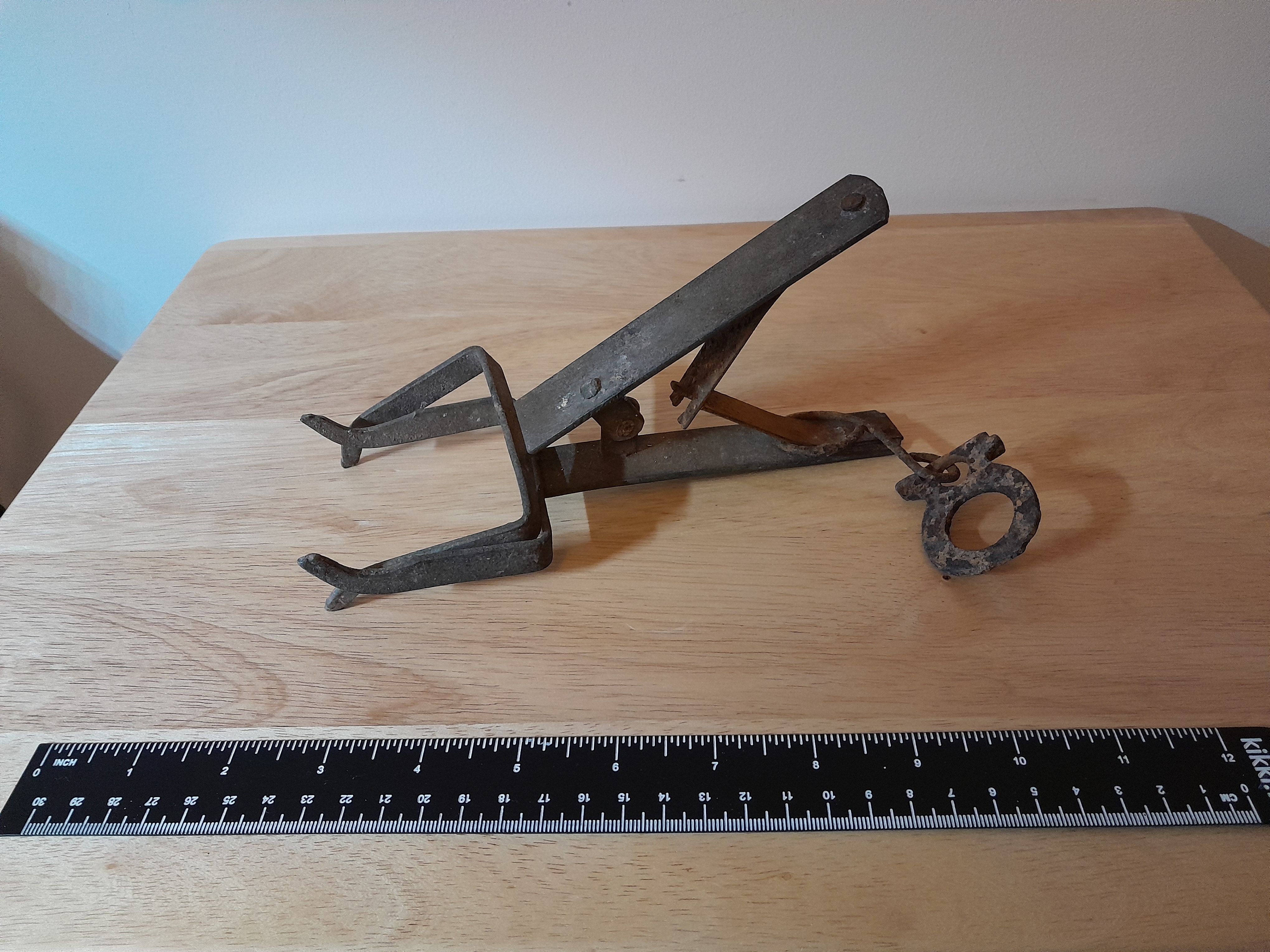
Mole Traps
This mole trap is considered by me as a relic of rural activities that, although still a legal way of controlling them, has been retired never to be used again and allowed to remain as a reminder of it's past. Moles are carnivorous mammals that primarily live underground. They can grow to 7 inches (18 cm) in length and weigh up to 4 pounds (1.8 kg). Because moles eat soil pests like grubs and billbugs, increased mole activity indicates a high number of pests in the soil.
Due to a mole's habit of digging into lawns to create mole hills and disrupting plant life in search of food, they are often considered pests. There are many variations of the simple mole trap. The scissor trap is probably the most commonly used of all the modern mole traps, it is relatively easy to set and use by a novice trapper. The RSPCA does not recommend the use of such traps as there is a risk the trap will not kill the mole outright and may cause prolonged suffering. Under the Spring Traps (Approval) Order 2012, anyone using traps must take precautions in preventing the traps causing injury or death to any species other than the one it was intended for.
This mole trap is considered by me as a relic of rural activities that, although still a legal way of controlling them, has been retired never to be used again and allowed to remain as a reminder of it's past. Moles are carnivorous mammals that primarily live underground. They can grow to 7 inches (18 cm) in length and weigh up to 4 pounds (1.8 kg). Because moles eat soil pests like grubs and billbugs, increased mole activity indicates a high number of pests in the soil.
Due to a mole's habit of digging into lawns to create mole hills and disrupting plant life in search of food, they are often considered pests. There are many variations of the simple mole trap. The scissor trap is probably the most commonly used of all the modern mole traps, it is relatively easy to set and use by a novice trapper. The RSPCA does not recommend the use of such traps as there is a risk the trap will not kill the mole outright and may cause prolonged suffering. Under the Spring Traps (Approval) Order 2012, anyone using traps must take precautions in preventing the traps causing injury or death to any species other than the one it was intended for.
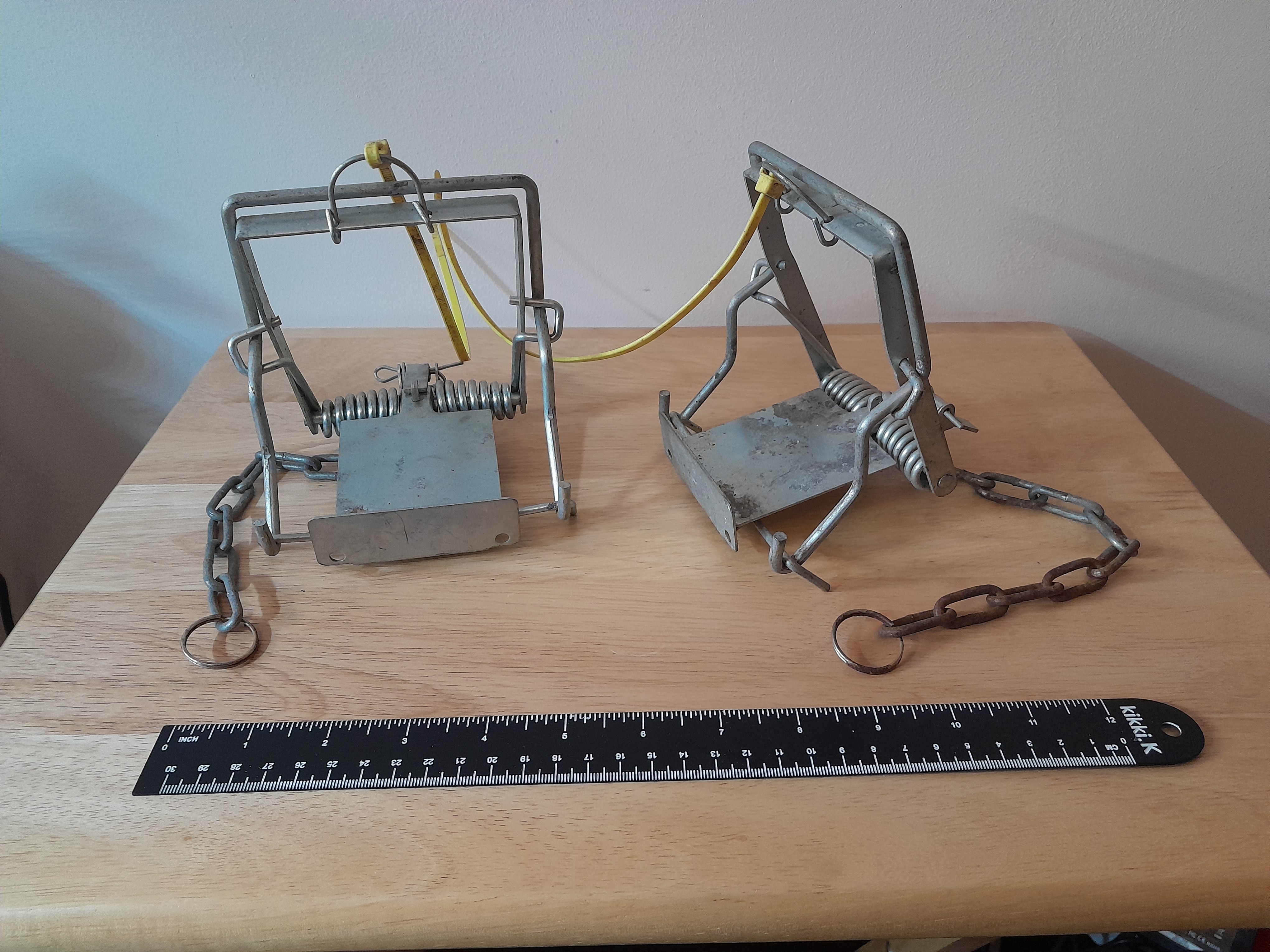
Fen Mark 6 Trap
Grey squirrels may look harmless in the garden, but in the UK they are one of the most destructive pests. They chew through loft insulation and electrical wiring, strip bark from trees, and raid bird feeders. Left unchecked, infestations can become both costly and stressful.
A larger and sturdier trap than the Fen Mark 4; suitable for grey squirrels, weasels, rats and mice and in addition mink and rabbits. Should no longer be used for stoats.
Squirrel traps are devices used to capture squirrels, often for pest control or relocation purposes. Common types include live traps, which allow for humane capture, and snap traps, which kill the animal quickly.
In the UK, grey squirrels cannot be released once caught. Traps should be placed in areas with signs of squirrel activity. Pre-bait traps for several days to increase success rates. Live traps should be checked at least once every 24 hours. Legal to trap grey squirrels without a license, but check local regulations if on protected land. Must ensure humane dispatch of captured squirrels; drowning is illegal. Using traps effectively can help manage squirrel populations and prevent damage to property.
Grey squirrels may look harmless in the garden, but in the UK they are one of the most destructive pests. They chew through loft insulation and electrical wiring, strip bark from trees, and raid bird feeders. Left unchecked, infestations can become both costly and stressful.
A larger and sturdier trap than the Fen Mark 4; suitable for grey squirrels, weasels, rats and mice and in addition mink and rabbits. Should no longer be used for stoats.
Squirrel traps are devices used to capture squirrels, often for pest control or relocation purposes. Common types include live traps, which allow for humane capture, and snap traps, which kill the animal quickly.
In the UK, grey squirrels cannot be released once caught. Traps should be placed in areas with signs of squirrel activity. Pre-bait traps for several days to increase success rates. Live traps should be checked at least once every 24 hours. Legal to trap grey squirrels without a license, but check local regulations if on protected land. Must ensure humane dispatch of captured squirrels; drowning is illegal. Using traps effectively can help manage squirrel populations and prevent damage to property.
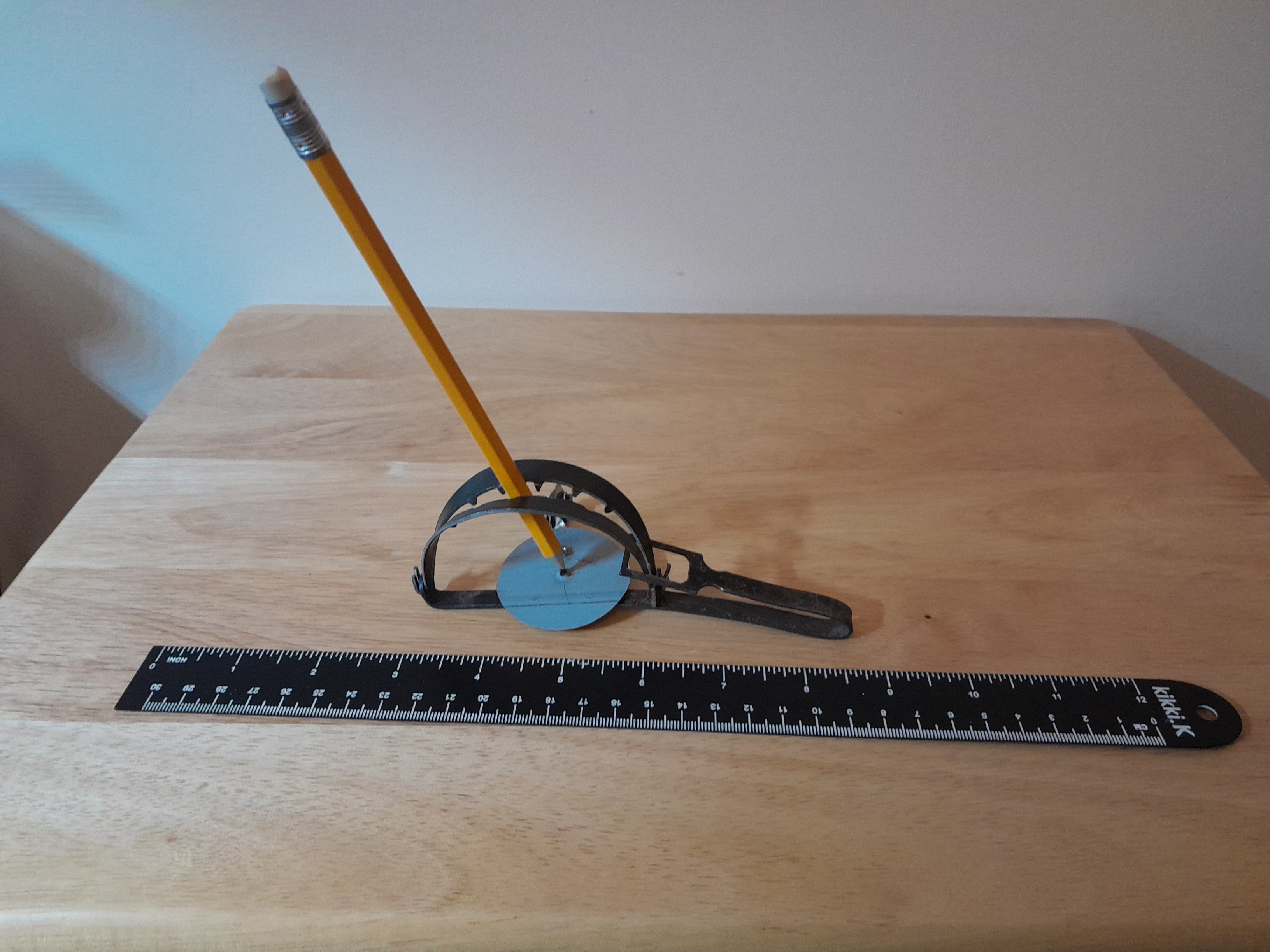
Egg Traps are a classic predator trap which worked equally well for birds and mammals. Unusually, compared to most of the gin traps of the same period, the Egg Trap is a bait trap rather than a tread trap.
The jaws are set in a horizontal position with one jaw is secured beneath a catch which is held in place by the weight of an egg, placed on the carrier. When an animal lifts the egg or breaks it, the catch is released and the jaws snap shut. A hen's egg is placed on the brass loop and holds the bait clip down so that when a fox or crow etc grabs the egg the trap is set off. Now illegal to use.
Designed to be set up indoor (in barn, hen house or attic) or outdoor in places and covered with straw or leaves, making it look like a nest. The trap is activated when the animal removes the bait. I These are a particular design of trap with an unusual trigger mechanism. They were developed specifically to target predators using an egg for bait.
The jaws are set in a horizontal position with one jaw is secured beneath a catch which is held in place by the weight of an egg, placed on the carrier. When an animal lifts the egg or breaks it, the catch is released and the jaws snap shut. A hen's egg is placed on the brass loop and holds the bait clip down so that when a fox or crow etc grabs the egg the trap is set off. Now illegal to use.
Designed to be set up indoor (in barn, hen house or attic) or outdoor in places and covered with straw or leaves, making it look like a nest. The trap is activated when the animal removes the bait. I These are a particular design of trap with an unusual trigger mechanism. They were developed specifically to target predators using an egg for bait.
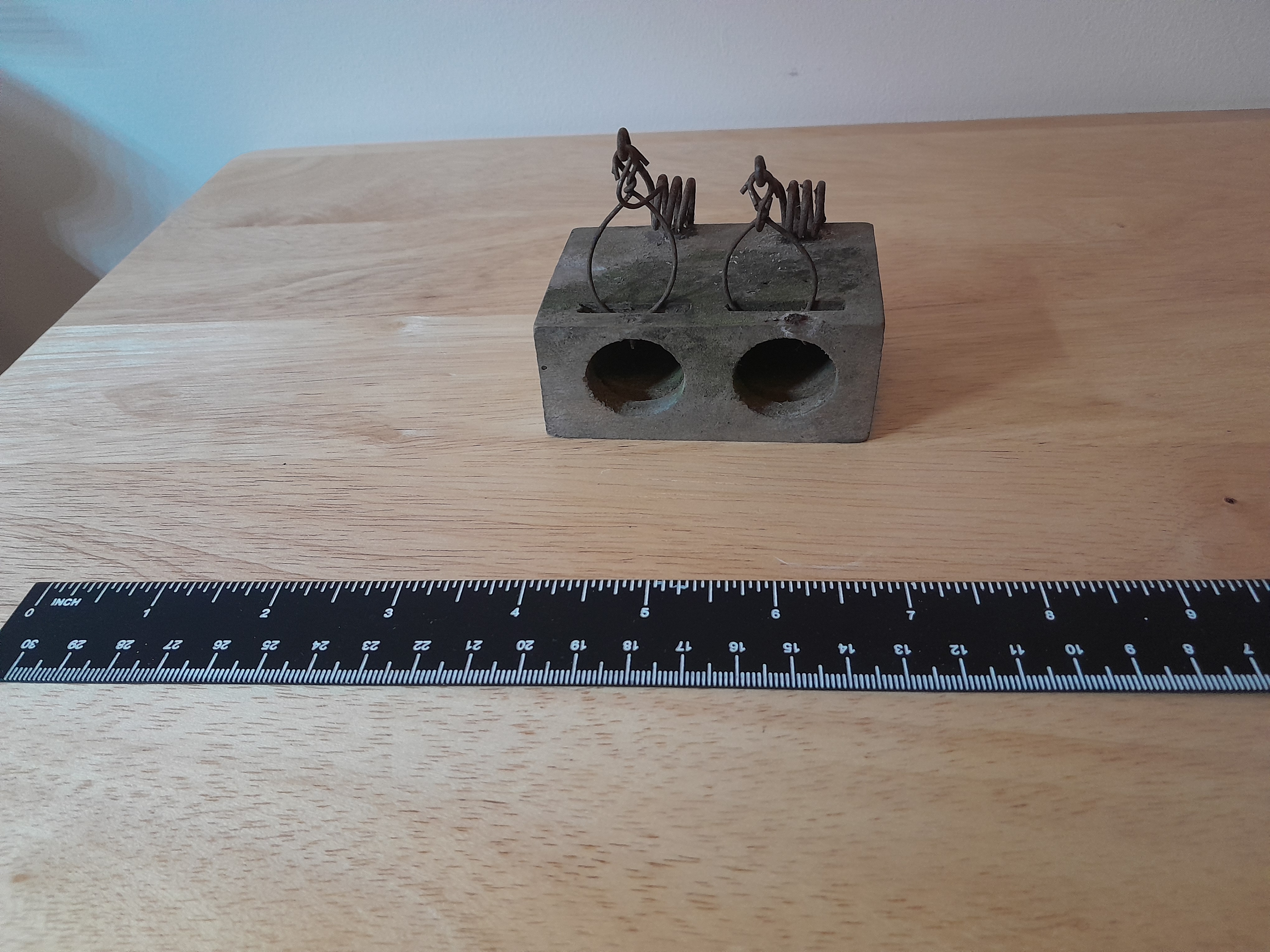
Choker Mouse traps are a very common style of mouse trap and although many different types exist, the principle of the trap remains the same. The body of the trap includes a number of holes, which act as tunnels and
are baited at the far end. A spring powered noose is able to move up and down just inside the mouth of the hole, usually fed through a slot cut through the top of the trap. When the spring is at rest this noose is held
high so that any mouse caught in it is jerked up against the top of the tunnel and killed.
In order to hold the sprung loop in place and release it when a mouse enters two types of trigger mechanism have developed. The traditional approach is a simple one. A piece of string is inserted through two pairs of corresponding holes, one pair at the top and the other in the base. The string is passed over the spring and tied tight – holding the spring down and the noose in place. The twin strands of the string pass through the tunnel top to bottom, effectively blocking it but allowing sight and smell of the bait. To reach the bait a mouse must chew through the string – which releases the spring and so lifts the noose.
This choker mouse trap in the photo is held down by a small metal bar which is missing and needs replacing. As the mouse attemtpts to squeeze through the noose, then it releases the the spring and the noose is drawn up.
In order to hold the sprung loop in place and release it when a mouse enters two types of trigger mechanism have developed. The traditional approach is a simple one. A piece of string is inserted through two pairs of corresponding holes, one pair at the top and the other in the base. The string is passed over the spring and tied tight – holding the spring down and the noose in place. The twin strands of the string pass through the tunnel top to bottom, effectively blocking it but allowing sight and smell of the bait. To reach the bait a mouse must chew through the string – which releases the spring and so lifts the noose.
This choker mouse trap in the photo is held down by a small metal bar which is missing and needs replacing. As the mouse attemtpts to squeeze through the noose, then it releases the the spring and the noose is drawn up.
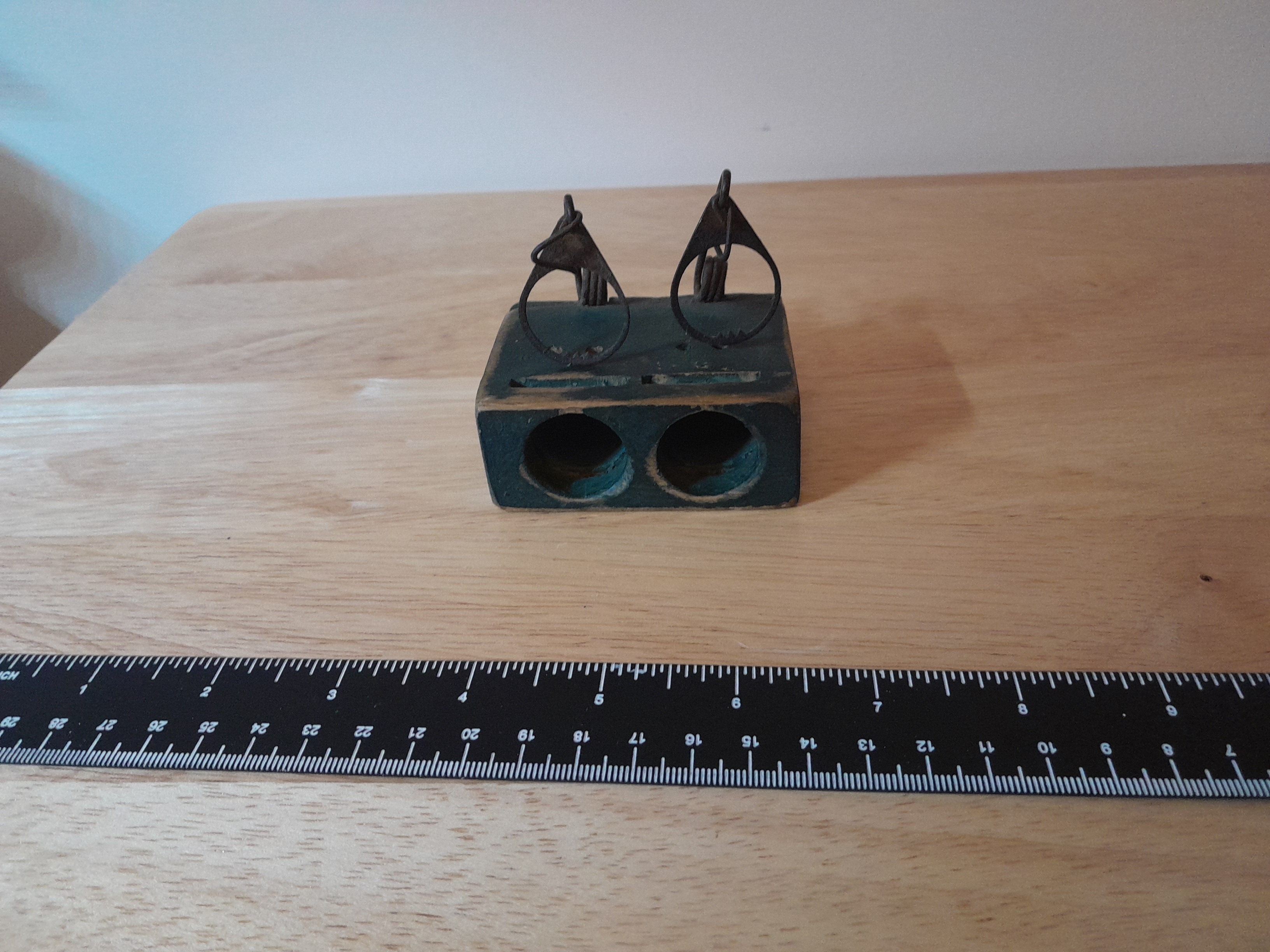
This choker mouse trap in the photo is similar to the above one except the spring is held down and the trap set by using string as detailed above.

Anglo Impassable Mole Trap.
This crude but very effective trap is a very successful stabbing trap patented by W.H.Reed of Launceston, Cornwall in 1888. GB patent No 7784. Produced by Brendon Bros of Callington, Cornwall. Was produced from 1888 to circa 1940. Just pull the plunger up and it clicks in place.
This crude but very effective trap is a very successful stabbing trap patented by W.H.Reed of Launceston, Cornwall in 1888. GB patent No 7784. Produced by Brendon Bros of Callington, Cornwall. Was produced from 1888 to circa 1940. Just pull the plunger up and it clicks in place.

Assommoir Grillage
This is an example of an old French rodent trap.
The mesh grill is hoisted up to an angle of 45 degrees with a piece of string secured at the metal loop in the base, threaded up to the metal at the top and down to the mesh, now at 45 degrees, and secured. The string is coated with soft cheese or grease or something similar which appeals to the rodent. The mouse or rat chews through the string and the trap releases the wire mesh to trap his body.
This vintage example is replaced with more modern traps. You can see by the 12 inch ruler in the photo that it is a very large trap.
This is an example of an old French rodent trap.
The mesh grill is hoisted up to an angle of 45 degrees with a piece of string secured at the metal loop in the base, threaded up to the metal at the top and down to the mesh, now at 45 degrees, and secured. The string is coated with soft cheese or grease or something similar which appeals to the rodent. The mouse or rat chews through the string and the trap releases the wire mesh to trap his body.
This vintage example is replaced with more modern traps. You can see by the 12 inch ruler in the photo that it is a very large trap.

Fen Mark 4 trap
This is a well known make suitable for grey squirrels, weasels, rats and mice.One of the pair is set, the other unset.
This type of trap in no longer legal to use.
This is a well known make suitable for grey squirrels, weasels, rats and mice.One of the pair is set, the other unset.
This type of trap in no longer legal to use.

Magnum Body Trap
This trap features a four way trigger which fires the trap when an animal pushes the trigger from any direction, including the side. It is used for mice, rats, weasels, stoats, grey squirrels, rabbits and mink.
This type of trap in no longer legal to use.
This trap features a four way trigger which fires the trap when an animal pushes the trigger from any direction, including the side. It is used for mice, rats, weasels, stoats, grey squirrels, rabbits and mink.
This type of trap in no longer legal to use.

Vintage small rodent trap
Old small vermin or rodent trap for mice or rats. No more humane than any others but replaced with modern cheaper to make models..
Old small vermin or rodent trap for mice or rats. No more humane than any others but replaced with modern cheaper to make models..

New small rodent Trap
Small modern vermin or rodent trap for mice or rats. No more humane than any others but made of a cheaper metal and tin combination.
Small modern vermin or rodent trap for mice or rats. No more humane than any others but made of a cheaper metal and tin combination.

New small rodent trap
Small modern vermin or rodent trap for mice or rats. No more humane than any others but a more expensive and heavy duty model.
Small modern vermin or rodent trap for mice or rats. No more humane than any others but a more expensive and heavy duty model.