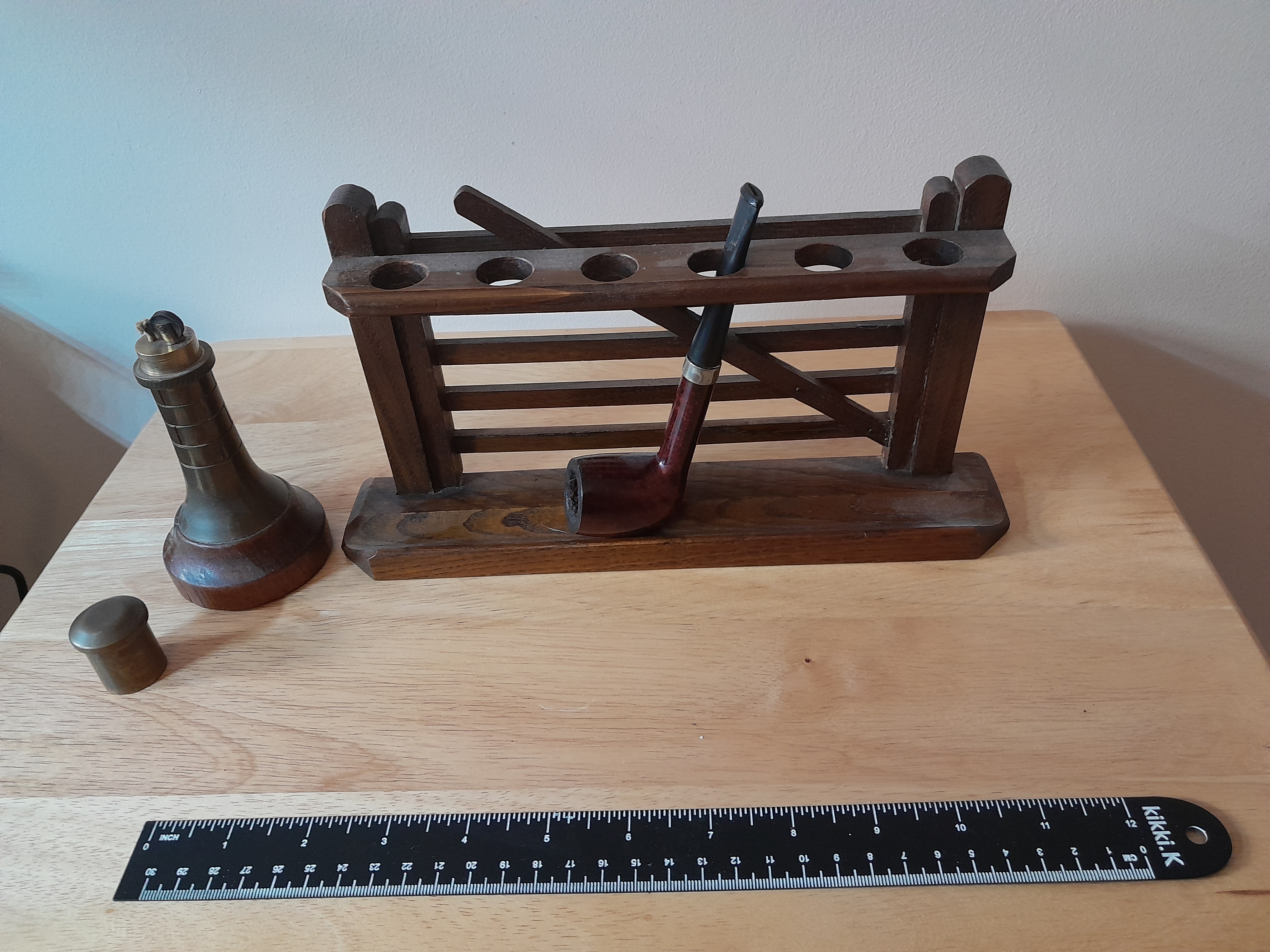
Smoking was a popular but bad habit. On the left is a cigarette lighter made as a tourist souvenir of a lighthouse. The lantern has been removed to show the flint and the wick which leads down to a small petrol reservoir. The lantern or light is the cap beside it.
The nice wooden pipe rack is designed as a farmer's field gate and a selection of smoking pipes could be lined up and chosen when the need for a smoke was felt. .
The nice wooden pipe rack is designed as a farmer's field gate and a selection of smoking pipes could be lined up and chosen when the need for a smoke was felt. .
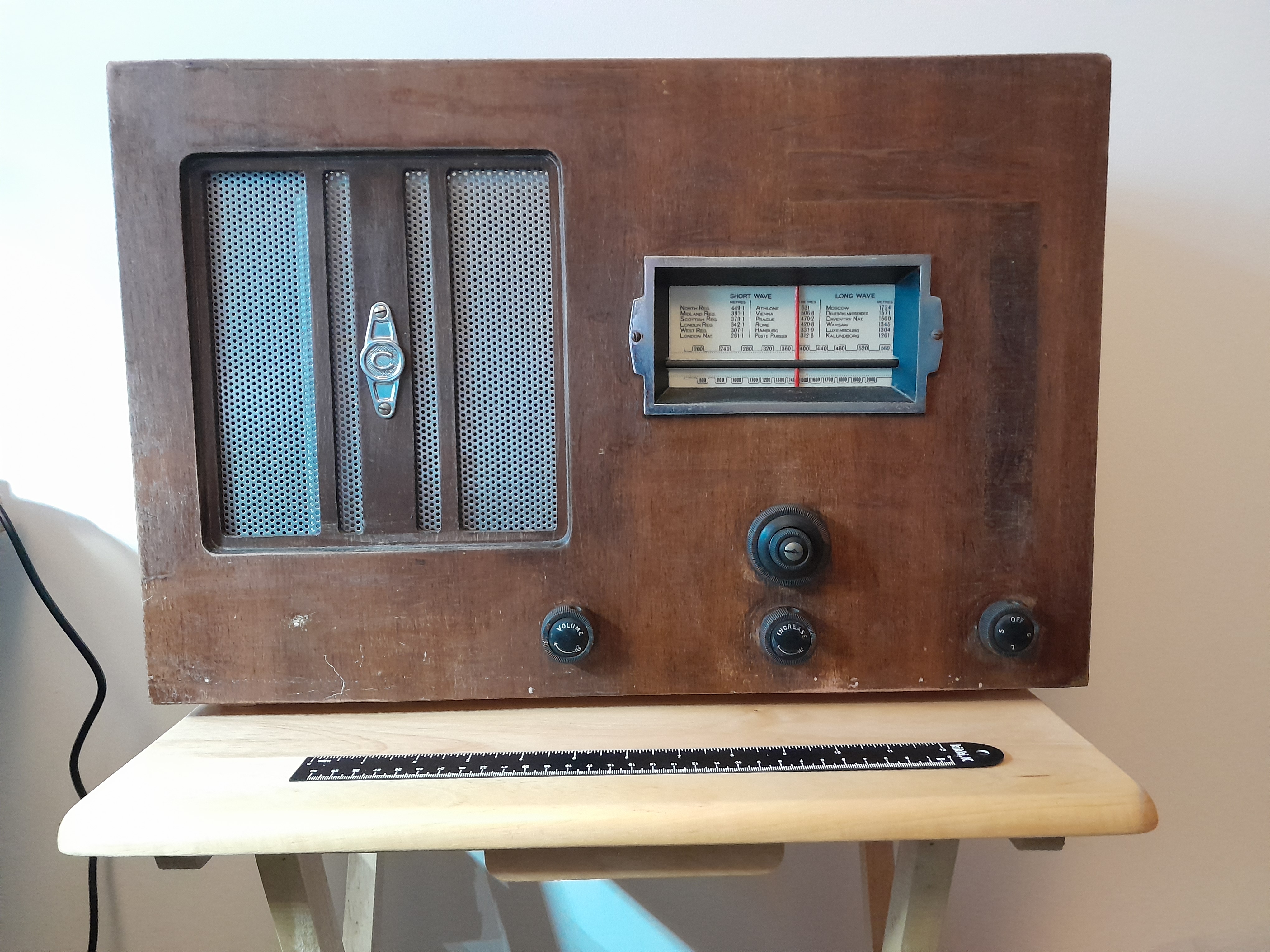
1935 Cossor wireless model 538.
I bought this wireless on eBay as non working so I could restore the cabinet and use it for the D Day celebrations. The woodworm base has been removed and replaced; and all non essentials bits inside thrown away as it was beyond ever working again and the main chassis kept to support the dials etc. The cloth speaker screen replaced with perforated steel; a wooden toothpick painted red acts as the tuning pointer; a new Perspex screen made from food packaging and the dial knobs rejuvenated with white tile grout. It was set with music blasting out from a concealed speaker and fooled everyone.
I bought this wireless on eBay as non working so I could restore the cabinet and use it for the D Day celebrations. The woodworm base has been removed and replaced; and all non essentials bits inside thrown away as it was beyond ever working again and the main chassis kept to support the dials etc. The cloth speaker screen replaced with perforated steel; a wooden toothpick painted red acts as the tuning pointer; a new Perspex screen made from food packaging and the dial knobs rejuvenated with white tile grout. It was set with music blasting out from a concealed speaker and fooled everyone.
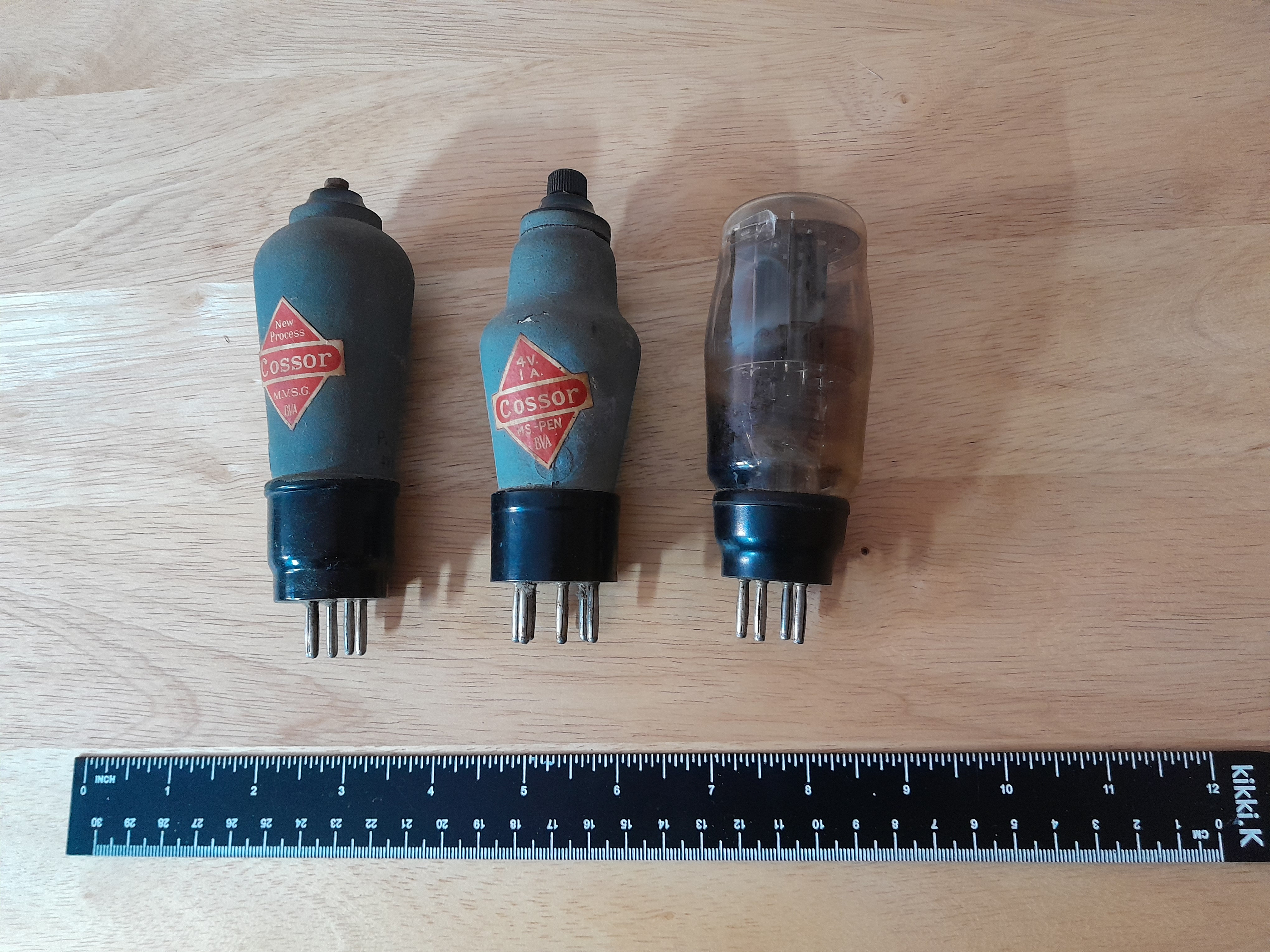
I saved these three old valves from the Cossor radio just to remind myself what a valve wireless or radio was about.
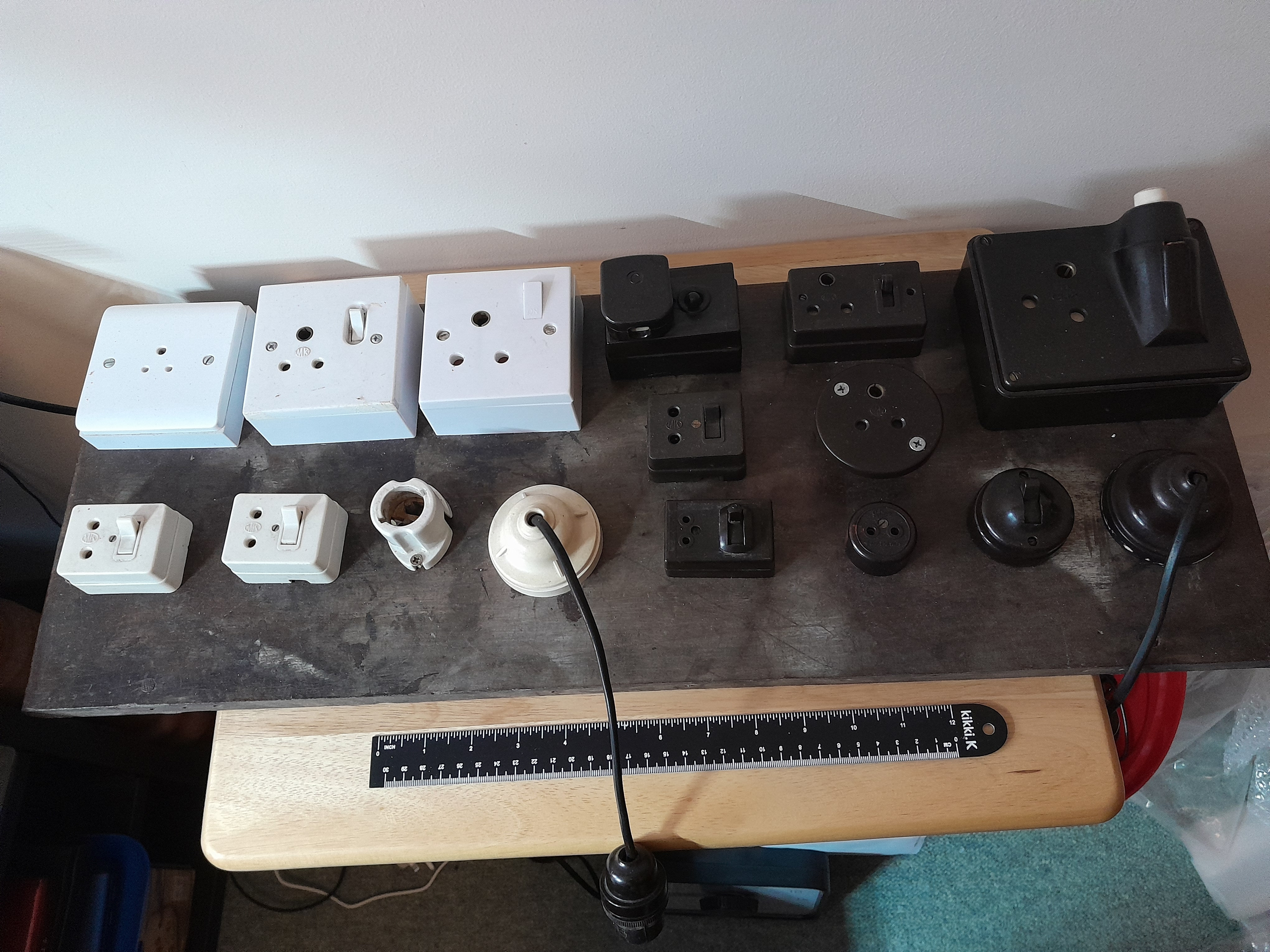
I made this board to show anyone who was interested a sample of all the types of electrical sockets and plugs there used to be. You can see the two pin plugs for table and floor lamps, and a wireless. There are three identical
white wall sockets but each one a different size and amps. Finally there is a cooker box. Some of the plugs are no so obvious in so much that they have locking devices built into them, and some too advanced that they did not appeal to the general
public.
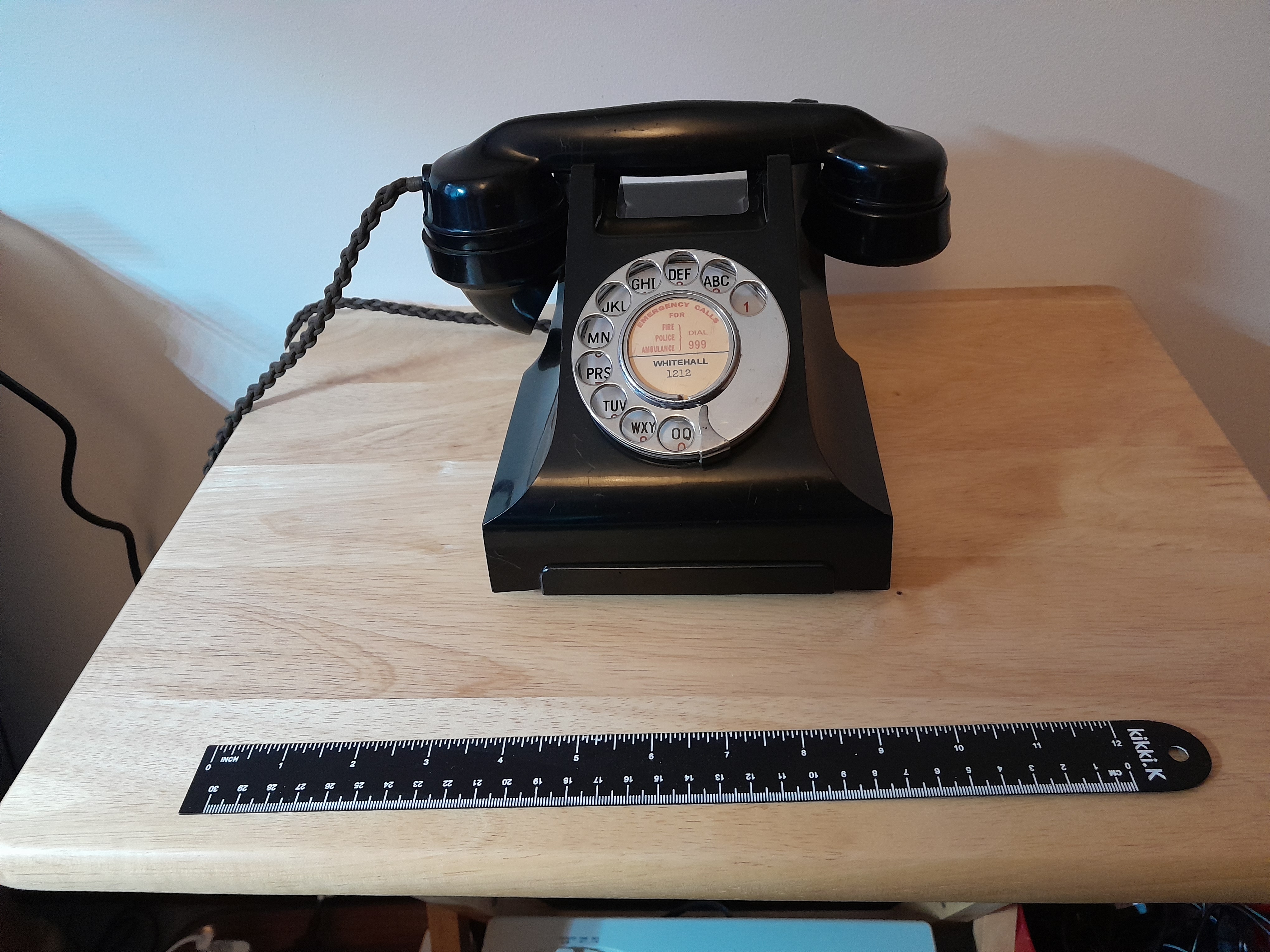
Classic 1940s GPO telephone
Bakelite no tray but dummy blank which means it was manufactured 1940 – 1947 as war issue. Standard 332 model. It has the classic silver rotary dialler with numbers and letters; and with the cloth braided cabling. It was one of the first models to include an internal bell. The dial card in this model is for Whitehall 1212 which was the number to dial Scotland Yard. Note that today we have the New Scotland Yard and no doubt a new number. It still works today and is very heavy but now we have our old copper cabling to the house removed, and we have internet digital voice phones, so I can no longer use it. However it was still in use in my first bank in 1960.
Bakelite no tray but dummy blank which means it was manufactured 1940 – 1947 as war issue. Standard 332 model. It has the classic silver rotary dialler with numbers and letters; and with the cloth braided cabling. It was one of the first models to include an internal bell. The dial card in this model is for Whitehall 1212 which was the number to dial Scotland Yard. Note that today we have the New Scotland Yard and no doubt a new number. It still works today and is very heavy but now we have our old copper cabling to the house removed, and we have internet digital voice phones, so I can no longer use it. However it was still in use in my first bank in 1960.
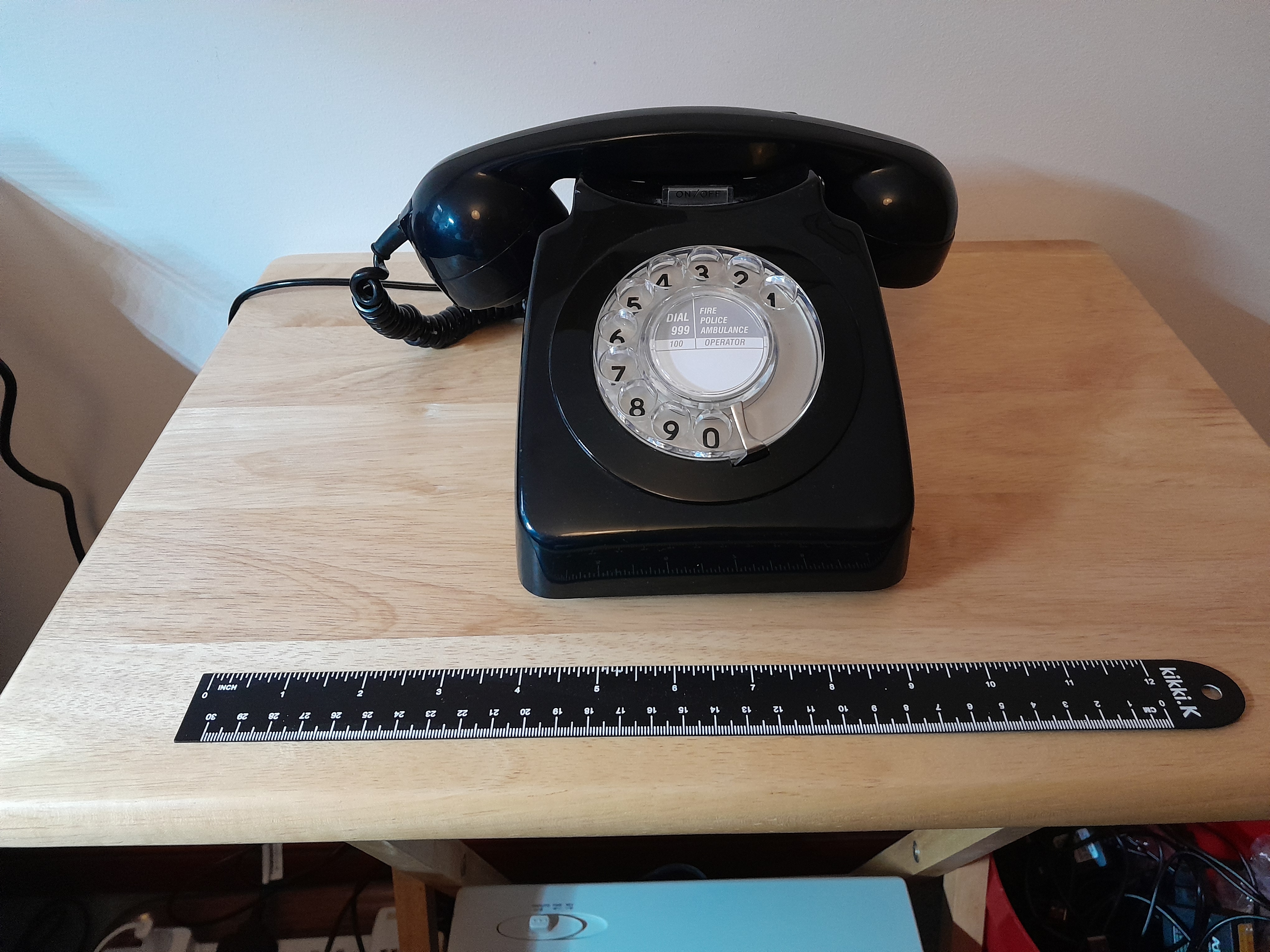
Classic 1960s GPO telephone
GPO model 746. It has a plastic body and the classic clear Perspex rotary dialler with numbers only; and with modern cabling. This was an era when The General Post Office, Telephones was getting ready for Subscriber Trunk Dialling without the need to go through an operator for long distance phone calls. It still works today and is very light but now we have our old copper cabling to the house removed, and we have internet digital voice phones, so I can no longer use it. However it was still in use in my bank in the 1960s.
GPO model 746. It has a plastic body and the classic clear Perspex rotary dialler with numbers only; and with modern cabling. This was an era when The General Post Office, Telephones was getting ready for Subscriber Trunk Dialling without the need to go through an operator for long distance phone calls. It still works today and is very light but now we have our old copper cabling to the house removed, and we have internet digital voice phones, so I can no longer use it. However it was still in use in my bank in the 1960s.
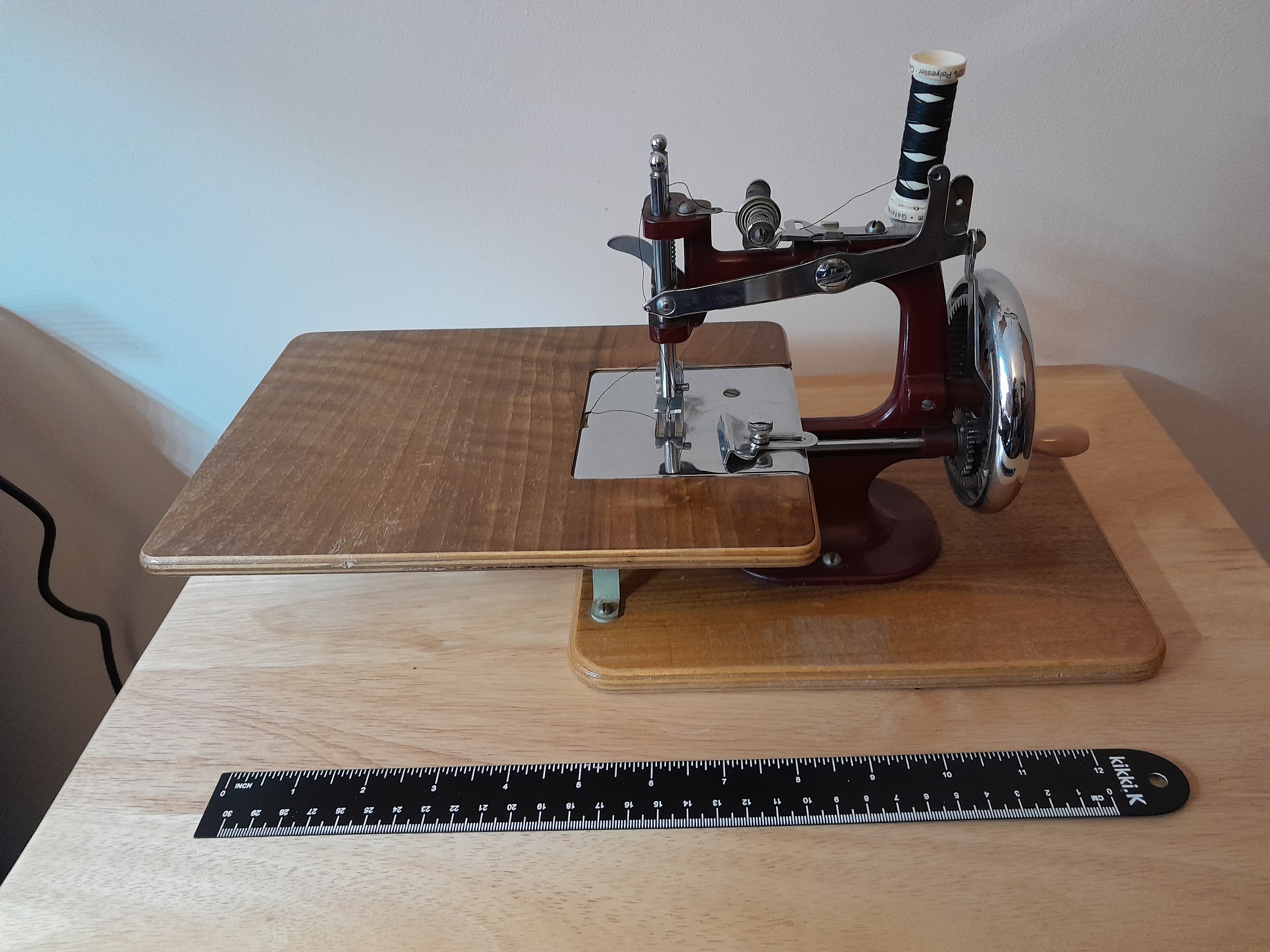
The Essex Miniature Sewing Machines were manufactured between 1946 and 1956 by the Essex Engineering Works at 12 Nelson Road, Wanstead, London, E11.
It was an almost identical copy of the Singer 20.The machine produces a simple single thread chain stitch, using only one thread source i.e. no bobbin or shuttle mechanism. On the reverse side a rather delicate pattern is produced.
After the Second World War there was a shortage of full sized sewing machines, with waiting lists for models. In 1946, recognising this shortfall in the market, the Essex Miniature Sewing Machine was born and the Essex MK1 went into production. A small, simple chain stitch machine that was extremely well engineered and today models can still be found looking as good and working as well as they did over half a century ago. It was never marketed as a child's machine, although many children in the post war years were bought them as presents, but as a proper small sewing machine that was easy to operate and gave an excellent stitching finish.
It was an almost identical copy of the Singer 20.The machine produces a simple single thread chain stitch, using only one thread source i.e. no bobbin or shuttle mechanism. On the reverse side a rather delicate pattern is produced.
After the Second World War there was a shortage of full sized sewing machines, with waiting lists for models. In 1946, recognising this shortfall in the market, the Essex Miniature Sewing Machine was born and the Essex MK1 went into production. A small, simple chain stitch machine that was extremely well engineered and today models can still be found looking as good and working as well as they did over half a century ago. It was never marketed as a child's machine, although many children in the post war years were bought them as presents, but as a proper small sewing machine that was easy to operate and gave an excellent stitching finish.
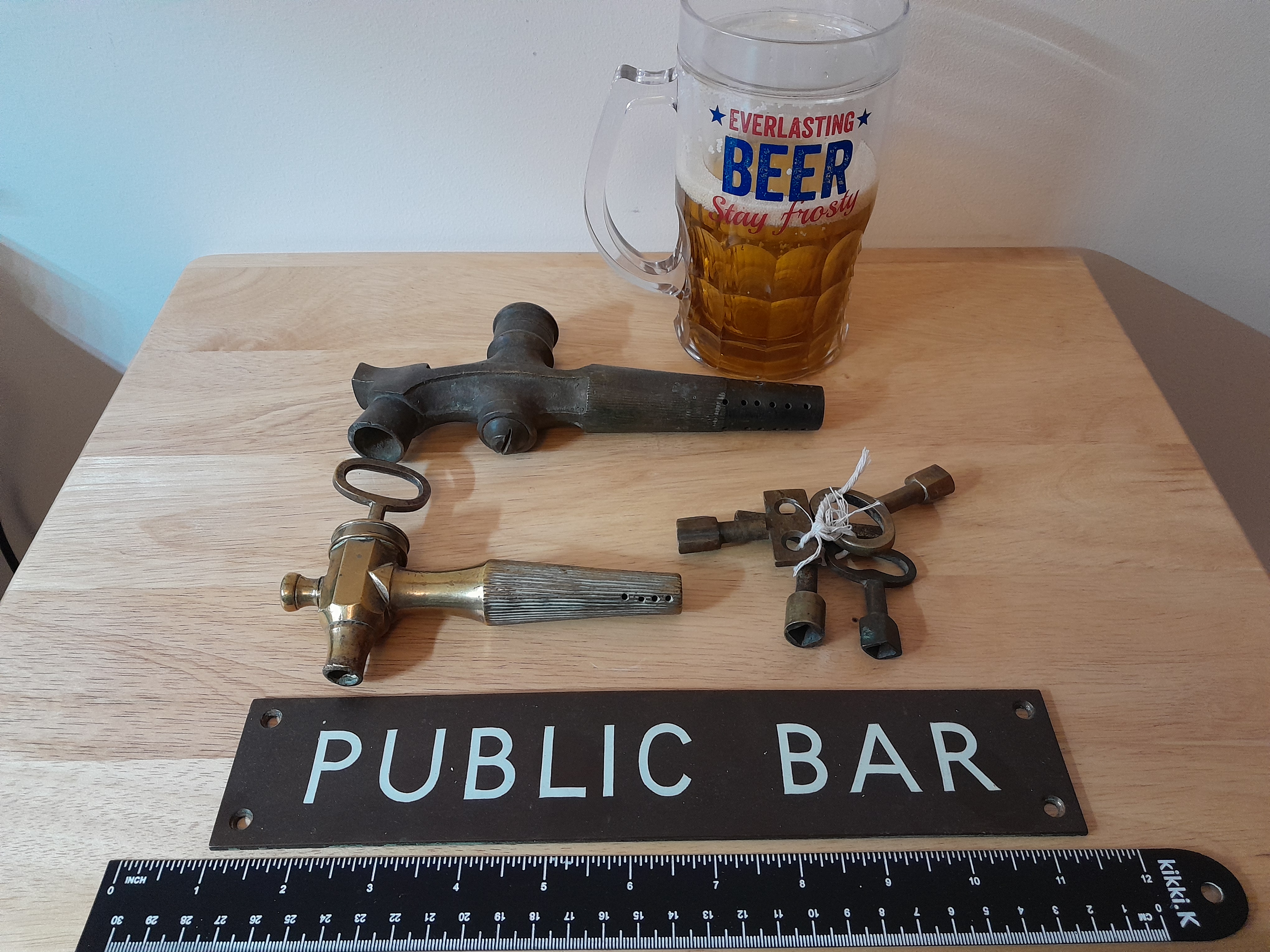
This photo shows a fake but fun half drunk pint of beer. It is here to add connectivity to the Public Bar sign and the selection of barrel taps and their keys. The beer is trapped between two layers of clear glass and will
make most people flinch if you pretended to throw it over them.
I had my first pint of beer in 1960 in the Swan Hotel, Alton. It was a Courage, Barclay and Simmonds ale. I was introduced to the 'boys' which was the weakest and cheapest and over time graduated to 'directors' which was the top of the range. The relic of the Victorian era was due to change with the modern times. There was a Lounge Bar which was used by the local banker, solicitor etc to enjoy their drink in relative comfort with comfortable upholstered seats and carpet on the floor and pictures on the wall and mix with those they considered to be their social equals. Then there was the 'Public Bar', where the 'common' man could mix with his friends in a basic room with no frills and purchase his drink at a greatly reduced price. The Public Bar was often irreverantly referred to as the Spit and Sawdust. In addition there would be a 'Private Bar' for small gatherings such as Freemasons.
A Spigot is more commonly known as a Barrel Tap, unlike most taps which had the handle attached to the tap to turn it on or off, these barrel taps had a handle that was separate from the main body and is commonly known as a key, which opened and closed the Tap. Wooden Barrels have a wooden plug sometimes known as a “bung hole”. These spigots are then hit with a wooden mallet into the “Bung Hole” pushing the wooden plug into the barrel, allowing access to the liquid contents via a tap, this allows a person who has access to the key to control who has the beer or more importantly how much is consumed. These have died out over time.
I had my first pint of beer in 1960 in the Swan Hotel, Alton. It was a Courage, Barclay and Simmonds ale. I was introduced to the 'boys' which was the weakest and cheapest and over time graduated to 'directors' which was the top of the range. The relic of the Victorian era was due to change with the modern times. There was a Lounge Bar which was used by the local banker, solicitor etc to enjoy their drink in relative comfort with comfortable upholstered seats and carpet on the floor and pictures on the wall and mix with those they considered to be their social equals. Then there was the 'Public Bar', where the 'common' man could mix with his friends in a basic room with no frills and purchase his drink at a greatly reduced price. The Public Bar was often irreverantly referred to as the Spit and Sawdust. In addition there would be a 'Private Bar' for small gatherings such as Freemasons.
A Spigot is more commonly known as a Barrel Tap, unlike most taps which had the handle attached to the tap to turn it on or off, these barrel taps had a handle that was separate from the main body and is commonly known as a key, which opened and closed the Tap. Wooden Barrels have a wooden plug sometimes known as a “bung hole”. These spigots are then hit with a wooden mallet into the “Bung Hole” pushing the wooden plug into the barrel, allowing access to the liquid contents via a tap, this allows a person who has access to the key to control who has the beer or more importantly how much is consumed. These have died out over time.